
How to Make Your Strength Workouts Worth It
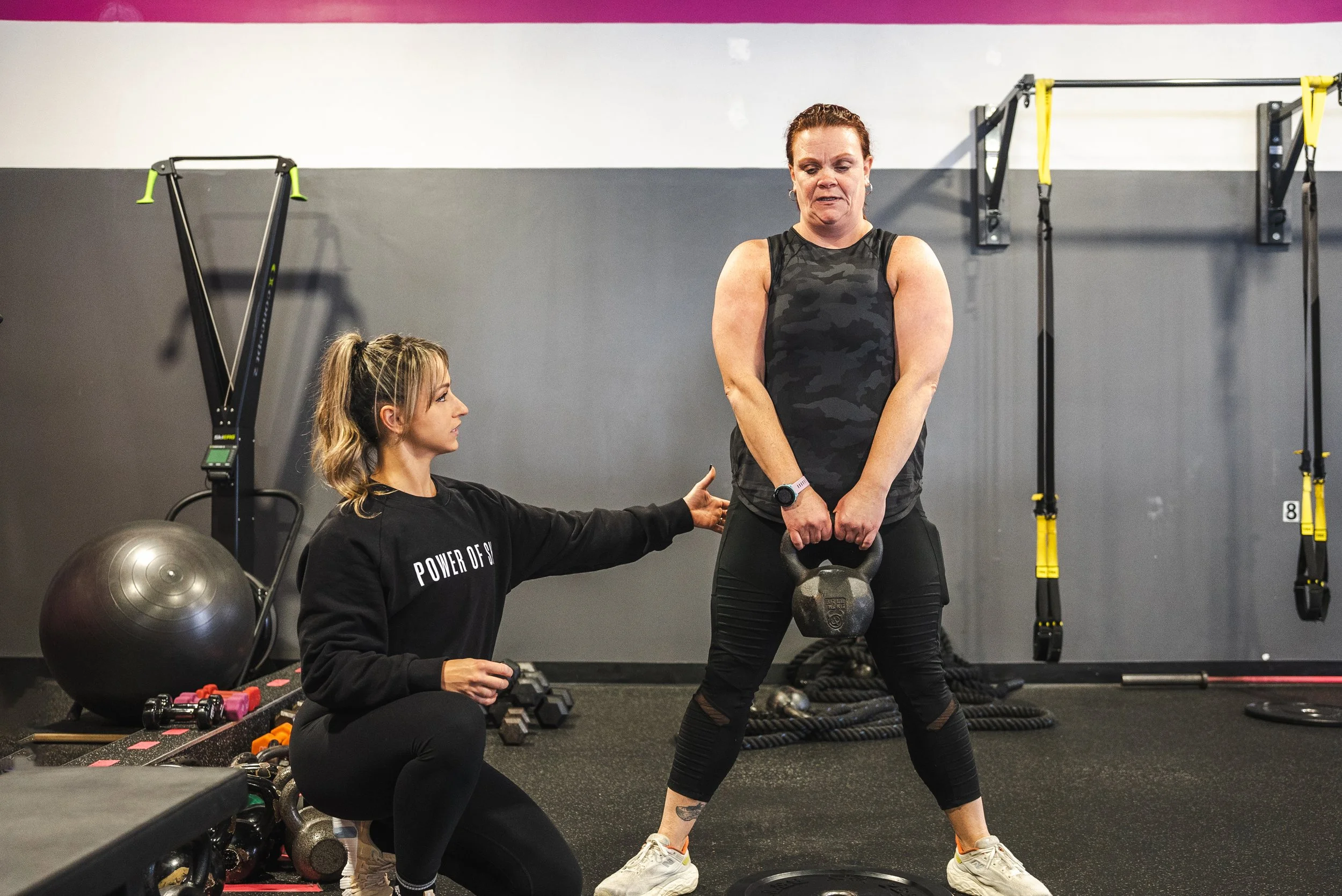
It’s been a minute since we’ve written here, but we’re breathing some life back into the KFIT blog. We wanted a place you could land outside of class for education, reminders, and simple tips that help you get more out of the work you’re already doing. Think of this as an extension of the coaching you hear on the floor—without having to remember everything mid-workout. So let’s start with something foundational.
This month at KFIT, our focus is getting a little more intentional with your weights.
Maybe you’ve been coming for a while and automatically grab the same dumbbells every class.
Maybe you’re newer and don’t fully understand the science behind our programming yet.
Or maybe you don’t care how much you lift, you just want results.
All of that is valid. But intention is what turns movement into progress.
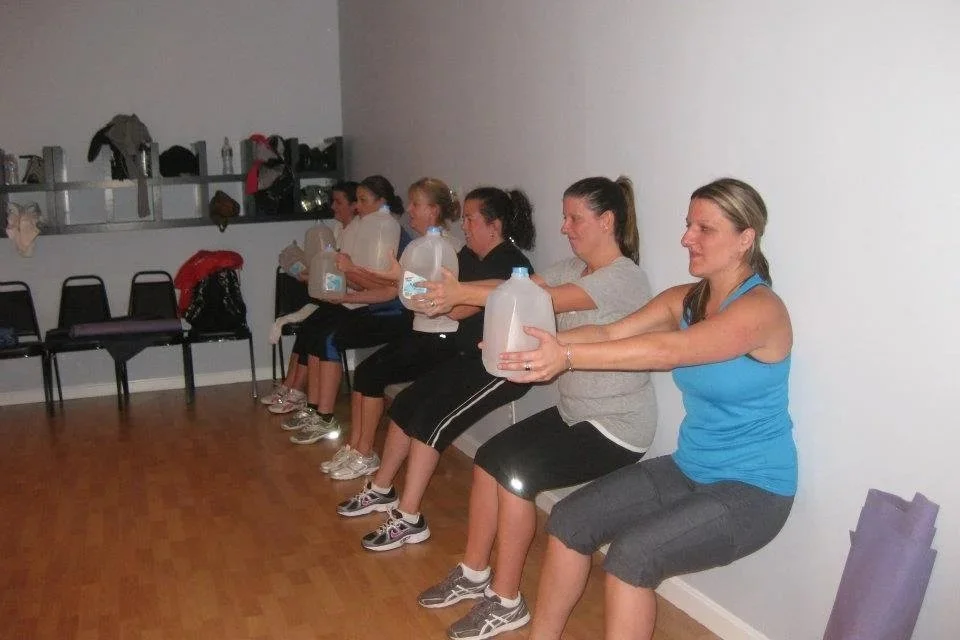
Speaking of progress, check out this thowback to see how far we have progressed! We started with water gallons as weights and now have dumbells up to 45lbs:)
Tip1: Warm-Up Sets: Know Where You’re Going Before You Start
If you don’t know what your working weight is for a lift, chances are you’re not warming up correctly.
Warm-ups aren’t random. They’re designed to prepare your nervous system, joints, and tissues for the load you’re about to handle. If you have no idea where you’re ending up, you’re guessing, and guessing is how progress stalls or injuries sneak in.
You should almost always hit 2–3 warm-up sets before your main working weight. Knowing your target weight allows you to make intentional jumps instead of chaotic ones.
For our stronger members: heavier lifts (especially lower body) take longer to ramp up. Try completing 2-3 warm-up sets before adding accessory movements, so your not rushing big jumps later when fatigue is already high.
And one important reminder, what ever you do…
Tip 2: Don’t Be Goldilocks!!!
One thing we see often? Bar hopping. You bounce from station to station, testing weights like, “Is this too light? Too heavy? Just right?” with no real plan.
This is a recipe for injury.
Hopping under a bar your nervous system isn’t prepared for is basically negligence (said with love). Warm up smarter. Know your weights. Your body will thank you, and you’ll get more out of class.
Tip 3: Reps Matter (and So Does the Weight You Choose for Them)
Understanding your working weight doesn’t stop at warm-ups, it extends directly into rep ranges. A weight you use for 3 sets of 3 reps should look very different than the weight you choose for 3 sets of 8, or 3 sets of 10. While all of these fall under strength training, they place completely different demands on your body.
Knowing that you did sumo deadlifts for 6 reps at a certain weight last time, and that today you’re programmed for 3 reps, is valuable information. It tells you the intent has changed, and your weight probably should too. Without that context, most people default to guessing.
We recommend using a simple tracking app like Hevy (Coach Sharilynn’s favorite). You don’t need to track perfectly, just consistently enough to notice patterns. Over time, this removes guesswork and helps you load appropriately to get the bets results.
Tip 4: You’re Not Married to Your Workout Weight
If a workout has multiple rounds, the weight you choose is not a lifelong commitment.
I personally like to use the first round or two as a “feeler” with a weight I know I can own, then bump up if I’m feeling good. This works well for any an all movements.
Maybe you try a heavier weight for one round.
Next time, two rounds.
And before you know it, that weight becomes your new normal.
That’s how stimulus is introduced. That’s how strength is built.
Tip 5: LAst But not least…Choose one Focus per class
One last piece I want to leave you with: you don’t need to progress everything at once.
Trying to lift heavier, run faster, improve form, and feel amazing all in the same workout is a lot. When we overstimulate too many variables at once, it often becomes discouraging instead of encouraging.
Instead, choose one thing in the workout to challenge yourself with.
Maybe today that’s pushing your run pace just a little faster than usual. Maybe it’s trying a new kettlebell weight for one movement. Maybe it’s slowing down and really owning your form instead of rushing.
Progress doesn’t have to be loud or dramatic to be effective.
The Big Picture
Strength training doesn’t have to be complicated, but it does need to be intentional.
If you ever feel unsure, about weights, reps, pacing, or progress, that’s your cue to grab a coach. You don’t have to guess your way through class. We’re here to guide you. You bring the effort. We’ll figure out the rest together.
— Coach Kerrie
